
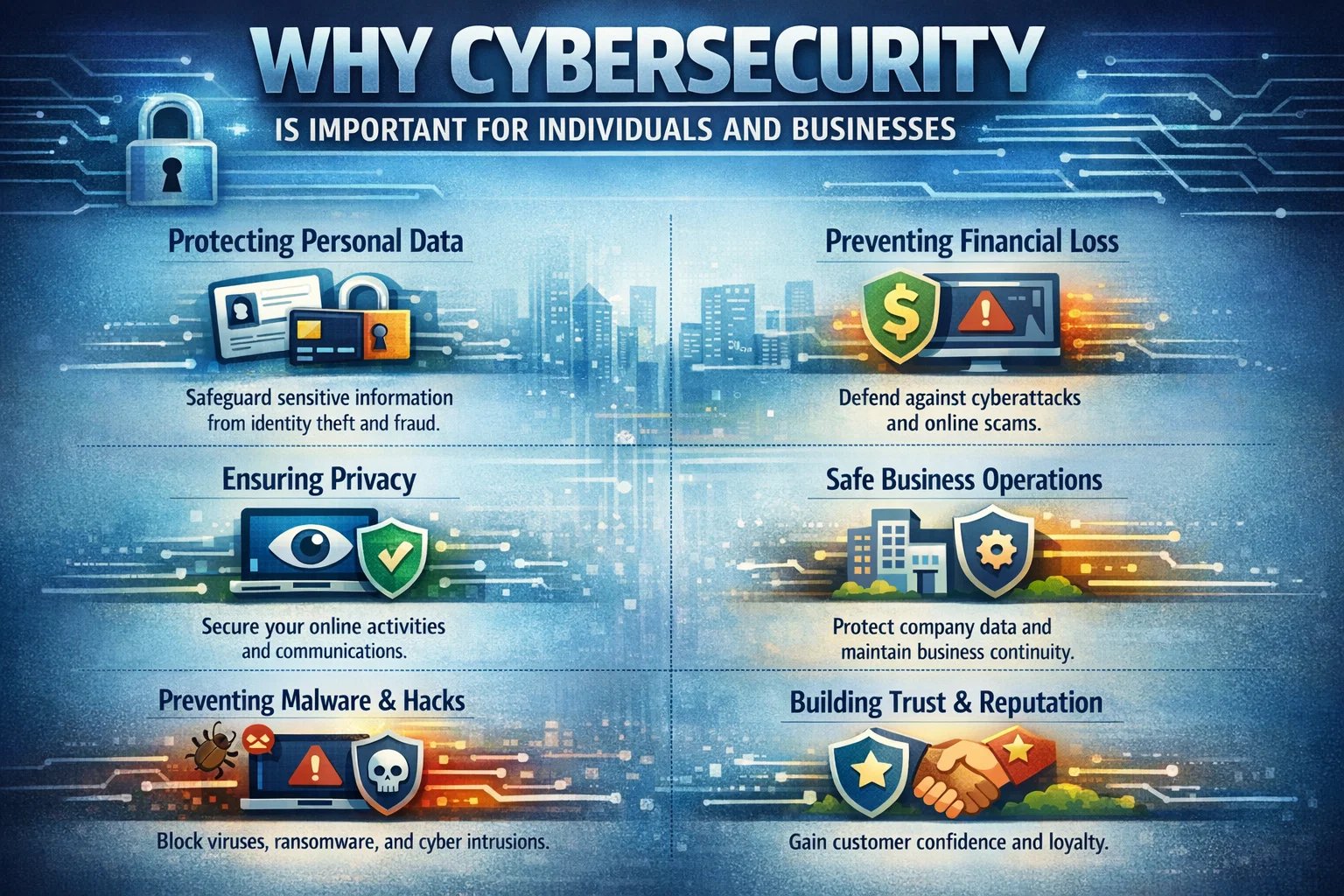
Cybersecurity is no longer a luxury or an optional IT upgrade—it has become a fundamental requirement for survival in the digital economy. From individuals managing online banking and personal data to enterprises handling millions of customer records, cybersecurity plays a vital role in protecting digital assets, financial stability, brand reputation, and legal compliance.
With the rapid rise of cloud computing, remote work, digital payments, artificial intelligence, and Internet of Things (IoT) devices, cyber threats have become more advanced, more frequent, and far more costly. Global cybercrime damages are projected to reach trillions of dollars annually, making cybersecurity one of the highest eCPM and CPC technology sectors worldwide.
What Is Cybersecurity?
Cybersecurity refers to the practice of protecting systems, networks, applications, and data from digital attacks. These attacks often aim to access, alter, destroy sensitive information, extort money, or disrupt normal operations.
Cybersecurity involves multiple layers of protection, including network security, endpoint protection, encryption, identity management, monitoring systems, and user awareness training.
Why Cybersecurity Matters More Than Ever
- Growth of digital payments and online banking
- Expansion of cloud-based business operations
- Rise of remote and hybrid work environments
- Massive data generation and storage
- Strict global data protection regulations
Even a single vulnerability can result in severe financial, operational, and reputational damage.
Importance of Cybersecurity for Individuals
1. Protection of Personal Data
Individuals store sensitive information online, including identity documents, banking details, passwords, medical records, and private communications. Cybersecurity prevents identity theft and unauthorized access.
2. Financial Security
Cybercriminals target individuals through phishing scams, ransomware, fake investments, and credit card fraud. Strong cybersecurity practices reduce financial risks.
3. Privacy Protection
Cybersecurity safeguards personal privacy by preventing misuse, exposure, or sale of personal data.
4. Safe Online Transactions
Encryption, authentication, and secure payment gateways protect online shopping, banking, and digital wallets.
Importance of Cybersecurity for Businesses
1. Data Breach Prevention
Businesses store customer records, financial data, and intellectual property. A breach can cost millions in fines, lawsuits, and lost trust.
2. Financial Loss Prevention
Ransomware, business email compromise, and fraud schemes directly impact revenue and operations.
3. Brand Reputation and Customer Trust
Customers expect organizations to protect their data. A single breach can permanently damage credibility.
4. Regulatory Compliance
Regulations such as GDPR, CCPA, HIPAA, and PCI-DSS require strict data protection. Cybersecurity helps avoid penalties and shutdowns.
5. Business Continuity
Cybersecurity ensures uninterrupted operations by preventing downtime, data corruption, and service disruption.
Common Cyber Threats Affecting Individuals and Businesses
| Threat Type | Description | Impact |
|---|---|---|
| Phishing | Fake emails or messages to steal sensitive data | Financial theft, identity fraud |
| Ransomware | Malware that encrypts data and demands payment | Operational shutdown, financial loss |
| Malware | Software designed to damage or spy on systems | Data theft, system issues |
| Insider Threats | Employees misusing authorized access | Data leaks, compliance risks |
| DDoS Attacks | Overloading servers to disrupt services | Downtime, revenue loss |
Cybersecurity Best Practices for Individuals
- Use strong, unique passwords and password managers
- Enable multi-factor authentication (MFA)
- Keep devices and software updated
- Avoid suspicious links and downloads
- Use secure Wi-Fi and VPN connections
Cybersecurity Best Practices for Businesses
- Deploy enterprise firewalls and endpoint protection
- Conduct regular security audits and penetration tests
- Encrypt sensitive data at rest and in transit
- Train employees in cybersecurity awareness
- Adopt zero-trust security architecture
Role of Cyber Insurance
Cyber insurance helps organizations recover from financial losses caused by data breaches, ransomware, legal claims, and operational disruption. It is becoming a core component of enterprise risk management.
Future of Cybersecurity
Artificial intelligence, machine learning, and automated threat detection are shaping the next generation of cybersecurity. As threats evolve, continuous adaptation and proactive defense strategies will be essential.
Conclusion
Cybersecurity is essential for protecting financial assets, personal data, business operations, and digital trust. Whether you are an individual or a global enterprise, investing in cybersecurity is no longer optional—it is a strategic necessity.
As digital transformation accelerates worldwide, strong cybersecurity ensures safety, compliance, and long-term sustainability in the modern digital ecosystem.