
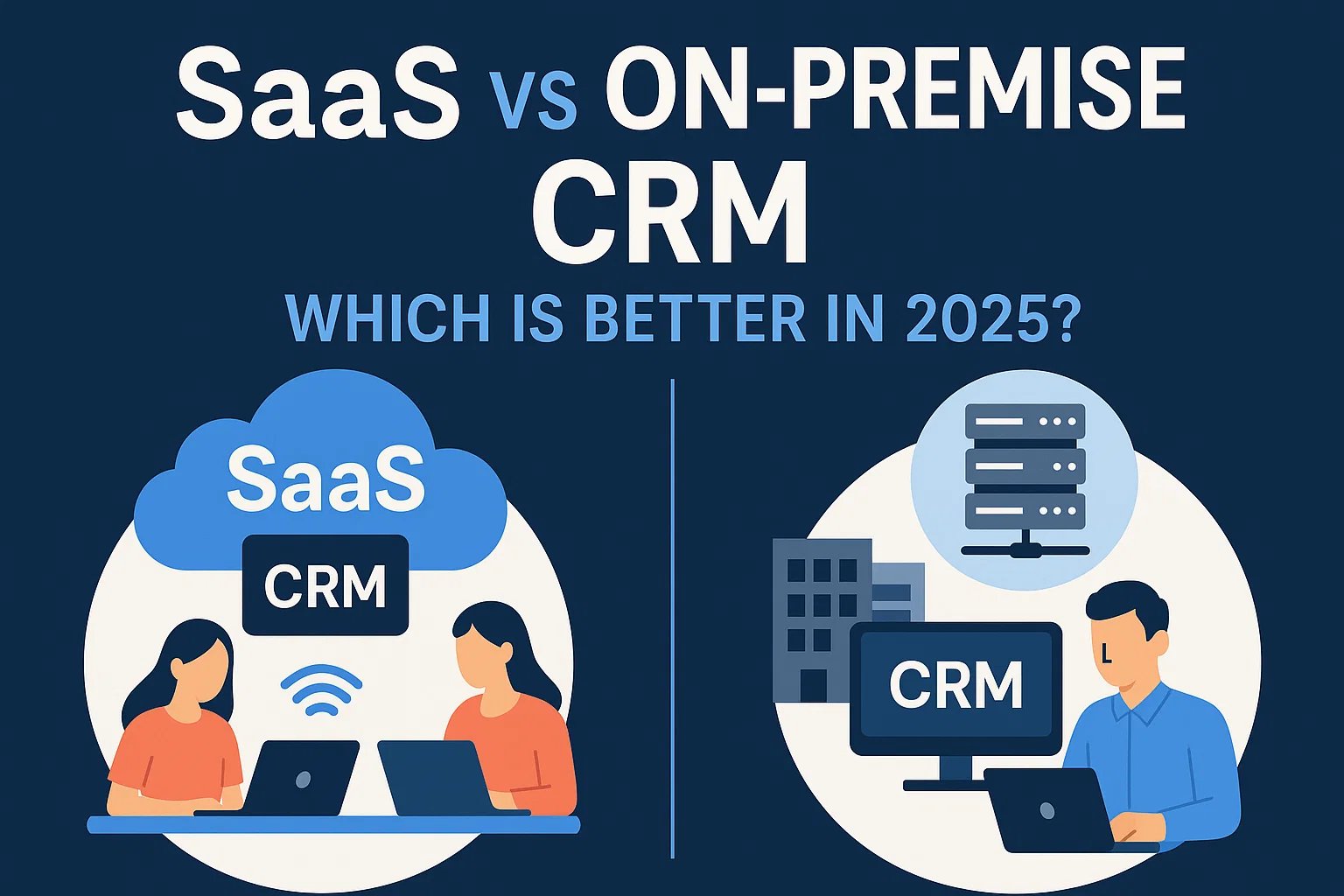
Customer Relationship Management (CRM) systems are pivotal for businesses aiming to streamline sales, marketing, and customer service operations. As we move further into 2026, companies often face the critical decision between adopting a SaaS CRM or an On-Premise CRM. Both deployment models have unique advantages, costs, and limitations, making it essential for decision-makers to evaluate their business needs carefully.
Understanding SaaS CRM
SaaS (Software as a Service) CRM is hosted on the cloud and accessed via a web browser. Providers manage all updates, maintenance, and infrastructure, enabling companies to focus solely on using the software.
Key Features of SaaS CRM
- Cloud-based access from any device
- Automatic updates and upgrades
- Subscription-based pricing
- Scalability for growing businesses
- Integration with third-party applications like email, marketing automation, and analytics
Pros of SaaS CRM
- Lower upfront costs through subscription pricing
- Faster deployment without dedicated IT infrastructure
- Remote accessibility from anywhere with internet
- Automatic security patches and feature updates
- Easy scalability as business grows
Cons of SaaS CRM
- Recurring subscription expenses over time
- Limited deep customization compared to on-premise systems
- Cloud data storage concerns in regulated industries
Understanding On-Premise CRM
On-Premise CRM is installed locally on company servers and maintained by an in-house IT team. This model offers complete control over infrastructure, customization, and data security.
Key Features of On-Premise CRM
- Local installation on company servers
- Full ownership of data and security
- Highly customizable workflows and modules
- No reliance on third-party cloud hosting
Pros of On-Premise CRM
- Complete data control and privacy
- Extensive customization for unique workflows
- Works without constant internet connection
- Easier compliance with strict regulations
Cons of On-Premise CRM
- High upfront infrastructure and licensing costs
- Longer deployment timeline
- Requires dedicated IT staff for maintenance
- Limited remote access unless VPN configured
SaaS vs On-Premise CRM: Side-by-Side Comparison
| Feature | SaaS CRM | On-Premise CRM |
|---|---|---|
| Deployment | Cloud-based | Local server installation |
| Cost | Subscription model, low upfront | High upfront license & infrastructure |
| Maintenance | Handled by provider | Managed in-house |
| Customization | Moderate | High |
| Data Control | Provider-managed | Full ownership |
| Accessibility | Anywhere, any device | Office-based or VPN access |
| Scalability | Easy to scale | Requires hardware investment |
| Security Updates | Automatic | Manual by IT team |
Factors to Consider When Choosing
- Business size and projected growth
- Availability of IT expertise and infrastructure
- Total cost of ownership and budget
- Regulatory compliance and data security needs
- Customization and integration requirements
- Remote work and mobile access demands
Industry Trends in 2026
Cloud adoption continues to accelerate, making SaaS CRM the dominant choice for SMEs and rapidly growing companies. AI-powered automation, predictive analytics, and marketing integrations strengthen SaaS value. However, on-premise CRM remains essential for sectors like finance, healthcare, and government where strict compliance, sovereignty, and security are mandatory.
Conclusion
Both SaaS and On-Premise CRM solutions provide strong benefits depending on organizational priorities. SaaS CRM excels in affordability, flexibility, and rapid deployment, while On-Premise CRM offers unmatched control, customization, and regulatory compliance. Evaluating operational needs, compliance requirements, and long-term costs will ensure the right CRM decision in 2026.
FAQs
1. Which CRM is more cost-effective for small businesses?
SaaS CRM is typically more affordable due to low upfront investment and flexible subscription pricing.
2. Can On-Premise CRM be accessed remotely?
Yes, but it requires VPN or remote desktop configuration, adding complexity.
3. Are SaaS CRMs secure?
Leading SaaS providers implement enterprise-grade encryption, monitoring, and regular security updates.
4. Which CRM suits highly regulated industries?
On-Premise CRM is often preferred where strict data control and compliance are mandatory.
5. Can SaaS CRM scale with business growth?
Yes, SaaS platforms allow seamless addition of users, storage, and advanced features.