
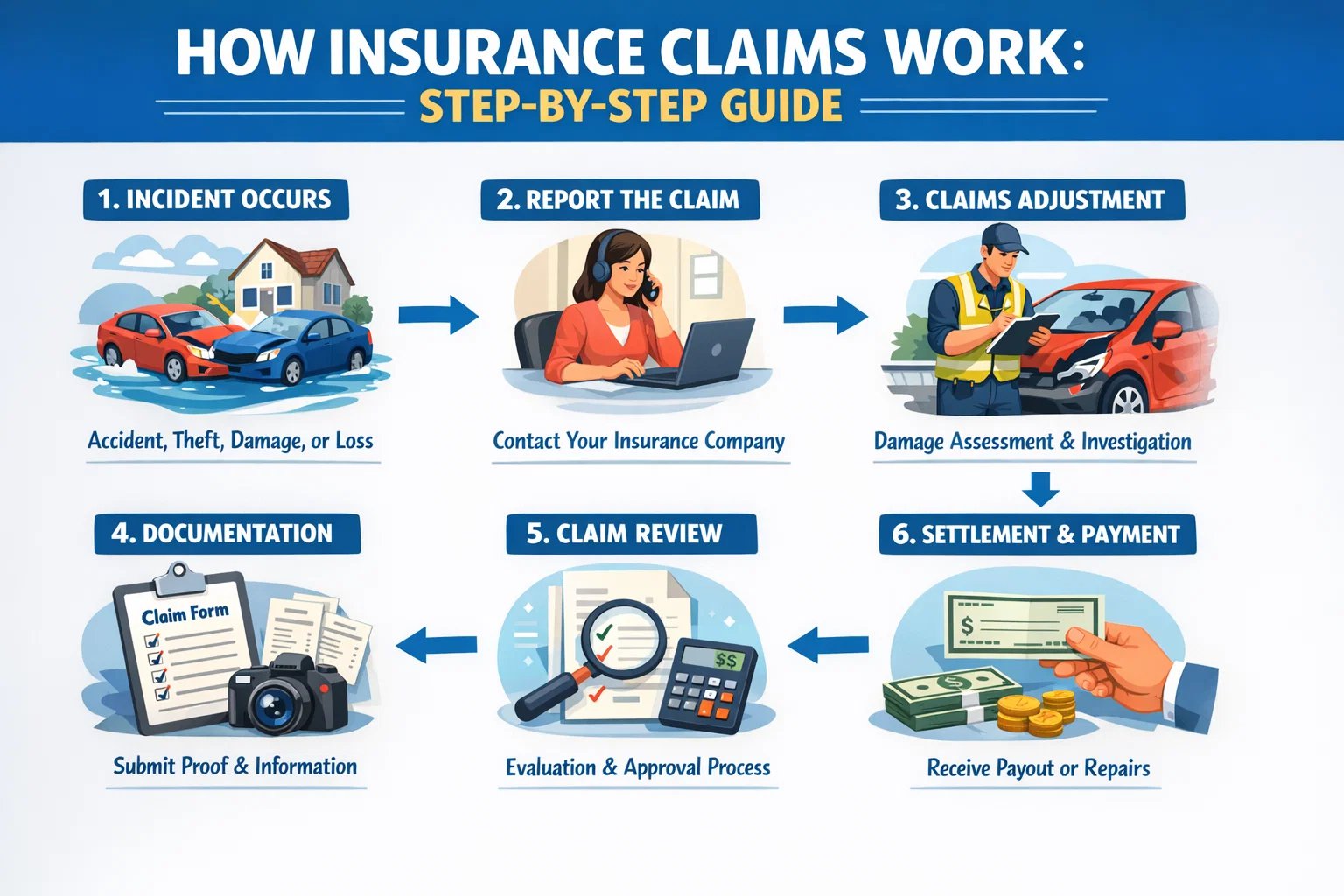
Understanding the insurance claims process is crucial for every policyholder. No matter how strong your insurance policy appears, its true value is proven only when you file a claim. Many people face delays, reduced payouts, or claim rejections simply because they don’t understand how insurance claims actually work.
This step-by-step guide explains the full insurance claims process, required documents, timelines, common mistakes, and proven strategies to ensure faster claim approval—especially in Tier-1 countries like the USA, UK, Canada, and Australia.
What Is an Insurance Claim?
An insurance claim is a formal request made by a policyholder asking the insurance company to provide financial compensation or coverage for a loss covered under the policy.
Claims may arise due to:
- Medical emergencies
- Car accidents
- Home damage or theft
- Travel disruptions
- Life insurance benefits
Why Understanding the Claims Process Matters
- Avoid claim rejection
- Speed up settlement
- Receive maximum payout
- Prevent disputes with insurers
- Protect long-term financial stability
Step-by-Step Insurance Claims Process
Step 1: Notify the Insurance Company Immediately
Contact your insurer as soon as the incident occurs. Delayed notification is a common reason for claim rejection.
Notification methods include:
- Customer support hotline
- Mobile insurance app
- Online claim portal
- Local insurance agent
Step 2: Review Your Policy Coverage
Confirm that the event is covered by checking:
- Coverage limits
- Deductibles
- Exclusions
- Waiting periods
Step 3: File the Insurance Claim
Submit the official claim form along with essential details such as:
- Policy number
- Date and time of incident
- Description of loss
- Estimated damage or expense
Step 4: Submit Required Documents
| Insurance Type | Common Documents Required |
|---|---|
| Health Insurance | Medical bills, prescriptions, discharge summary |
| Car Insurance | Accident report, photos, repair estimates |
| Home Insurance | Damage photos, police report, repair invoices |
| Travel Insurance | Tickets, delay certificates, medical records |
Step 5: Claim Assessment and Investigation
The insurer assigns a claims adjuster to verify:
- Policy validity
- Cause of loss
- Accuracy of claim amount
- Potential fraud indicators
Step 6: Claim Decision
- Approved: Full payout issued
- Partially Approved: Reduced payout due to deductibles or exclusions
- Rejected: Claim denied with explanation
Step 7: Claim Settlement
Once approved, payment is made either to the policyholder or directly to the service provider such as a hospital or repair center.
Typical settlement time in Tier-1 countries: 7 to 30 days.
Cashless vs Reimbursement Claims
- Cashless Claims: Insurer pays provider directly (common in health and car insurance).
- Reimbursement Claims: You pay first and receive repayment later.
Common Reasons for Claim Rejection
- Policy exclusions
- Non-disclosure of information
- Expired policy
- Late notification
- Incomplete documentation
Tips for Faster Claim Approval
- Read policy terms carefully
- Keep digital document copies
- Notify insurer immediately
- Respond quickly to queries
- Avoid exaggerating claims
Insurance Claims Timeline
| Claim Stage | Estimated Time |
|---|---|
| Claim Filing | Same day |
| Document Submission | 1–5 days |
| Assessment | 5–15 days |
| Settlement | 7–30 days |
What If Your Claim Is Denied?
- Request written rejection reason
- Submit additional proof
- File an appeal
- Contact insurance ombudsman
- Seek legal help for high-value claims
Final Thoughts
The insurance claims process becomes far less stressful when you understand each step clearly. Being organized, honest, and proactive greatly improves your chances of quick approval and full settlement.
Review your insurance policies regularly, maintain proper documentation, and act immediately during emergencies. Mastering the claims process ensures your insurance truly protects you when you need it most.